Cricket Equipment


This is predominantly important if he is playing with a hard cricket ball; so, work with his trainer to make sure that he gets into the custom of using his defensive gear properly.

Many cricket clubs will give bats and defensive gear, which is an advantage if new players are unsure about enduring with the game. However, once your young player becomes “captivated” on the sport, he is possible to want his own equipment.

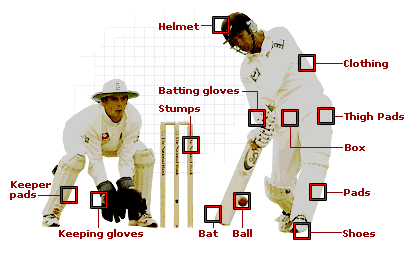
Cricket equipment divides well into hardware, protecting gear, clothing and shoes; and don’t forget a apposite bag to carry it all.

  • Ball – A red or white ball with a cap base, wrapped in twine covered with leather. The ball should have a circumference of 23 cm (9 inches) unless it is a for children size.
  • Bat – A made of wood bat is used. The wood used is from the Kashmir or English willow tree. The bat cannot be more than 38 inches (96.5 cm) long and 4.25 inches wide (10.8 cm). Aluminum bats are not allowed. The bat has a long handle and one side has a smooth face.
  • Stumps – 3 wooden poles known as the stumps.
  • Bails – Two crosspieces known as the bails
  • Boundary – A rope demarcating the perimeter of the field known as the boundary.
  • Sight panel – A screen placed at the state line known as the sight panel. This is aligned exactly parallel to the width of the pitch and behind both pairs of wickets.

Using the right cricket equipment makes any actor look and feel large. Of course, trying top of the series kit won’t make your youthful cricketer a improved player. The most imperative thing is that he uses equipment and clothes that he finds relaxed, keeps him safe - and makes him feel good.

Batsmen are allowed to wear scarf while batting. The batsman can be also caught out if the ball touch the glove in its place of the bat, provide the hand is in contact with the bat. This is because the glove is careful to be the porch of the bat. The batsman may also wear defensive helmets usually with a visor to protect themselves. Helmets are usually working when facing fast bowlers. While playing spinners, it might not be in work.

The wicketkeeper, due to being honestly behind the batsman and therefore having the ball bowled directly at him is allowable to wear leg guards, a helmet, a light internal glove and a large outside glove like a hand.


Make a Free Website with Yola.